
Ghapama: The Armenian Pumpkin Dish That Celebrates Fall
- Jessie Au
- Sep 26
- 6 min read

There are certain foods that seem to hold entire seasons within them. Apple pies taste like September afternoons. Hot chocolate tastes like December evenings. And then there’s Ghapama, a traditional Armenian pumpkin dish filled with rice, nuts, dried fruit, herbs, and spices — a dish that, to me, tastes like fall itself.
As fall approaches, with pumpkins suddenly popping up in every grocery store display, it feels natural to make Ghapama. It’s a dish that honors the harvest season, celebrates abundance, and brings people together around the table. And in our home, it’s also a way of connecting with heritage, tradition, and the rhythm of the seasons.
In this post, I’ll share what Ghapama is, why it’s such a perfect fall dish, and how you can make it yourself with a step-by-step recipe.

What Exactly is Ghapama?
At its simplest, Ghapama is a pumpkin that’s been hollowed out, filled with a fragrant mixture of rice, dried fruits, nuts, spices, and a drizzle of honey or butter, and then baked until everything melds together in steamy, aromatic harmony.
The pumpkin becomes tender and slightly caramelized, while the filling absorbs the sweetness of the fruit and the earthiness of the nuts. When you slice it open, steam rises out, carrying the smell of cinnamon, nutmeg, and roasted pumpkin. It’s dramatic, festive, and comforting all at once.
The name itself means “cooked pumpkin” in Armenian, but the dish is so much more than that. It’s a celebration food, one often reserved for holidays, weddings, or family gatherings. Imagine a whole pumpkin arriving at the table, stuffed and golden, waiting to be sliced like a cake and shared with everyone present — that’s the heart of Ghapama.
Why Ghapama Feels Perfect for Fall
Every season has its foods, but there’s something about fall that feels especially tied to traditions. Maybe it’s the turning of the year, maybe it’s the need for warmth and comfort as the air chills, or maybe it’s simply the abundance of harvest. Either way, Ghapama fits right in.
Pumpkin at Its Best – This is pumpkin season, after all. While pumpkin pies and soups are delicious, Ghapama showcases pumpkin in its whole form, letting the gourd itself shine as both vessel and ingredient.
A Harvest Celebration – With rice, nuts, dried fruits, and honey, Ghapama brings together many of the foods that have historically symbolized prosperity and abundance. Making it feels like giving thanks for what the earth has provided.
Comfort + Festivity – Fall meals often balance the cozy and the celebratory. Ghapama is both. It can be the star of a family dinner at home or the dramatic centerpiece at a holiday table.
Connection Through Tradition – For me, making this dish also means connecting to my husband’s Armenian heritage. It’s more than just cooking; it’s honoring a culture and carrying its traditions into our family kitchen.
Armenian Food Culture and Ghapama’s Place in It
Armenian cuisine is deeply rooted in agriculture, the land, and family. Meals are designed to feed many, and dishes often highlight grains, fruits, and herbs.
Rice and Grains: Pilafs are central to Armenian meals, and rice often carries flavors of butter, dried fruit, or herbs. Ghapama is essentially a celebratory pilaf, elevated by its pumpkin vessel.
Pumpkins and Squash: Pumpkins symbolize abundance, and stuffing them with precious ingredients like dried fruits and honey transforms the ordinary into the extraordinary.
Hospitality: Food in Armenia is about generosity. A stuffed pumpkin is meant to be shared, reinforcing the values of gathering and togetherness.
And of course, there’s that famous folk song “Hey Jan Ghapama”, sung by Harout Pamboukjian to celebrate the arrival of this dish at weddings and feasts. If you play it while cooking, you’ll instantly understand the joy this dish brings.
Recipe: How to Make Ghapama
Here’s a version of Ghapama you can make at home. It’s flexible — you can adjust the dried fruits, nuts, or spices to your taste — but this will give you a deliciously balanced, traditional result.
Ingredients (Serves 6–8)
1 medium pumpkin (5–7 lbs), firm and free of blemishes
2 cups rice (short- or medium-grain works best)
½ cup dried apricots, chopped
½ cup raisins or currants
½ cup dried cranberries or cherries
½ cup almonds, walnuts, or hazelnuts, roughly chopped
½ cup pistachios or pine nuts (optional, for richness)
3–4 tbsp honey (more if you prefer it sweeter)
½ tsp cinnamon
¼ tsp nutmeg
¼ tsp allspice
3 tbsp melted butter (or olive oil, for a lighter version)
Pinch of salt
Optional garnish: fresh mint, pomegranate seeds, or extra honey
Instructions
Prepare the Pumpkin
Wash the pumpkin thoroughly.
Cut off the top like a lid (save it for later). Scoop out the seeds and stringy pulp. You can save the seeds to roast separately. Add a light coating of olive oil brushed in.


Cook the Rice
Rinse the rice under cold water until it runs clear.
Parboil the rice in salted water for about 10 minutes — it should still be slightly undercooked, as it will finish in the oven. Drain well.
Make the Filling
In a large bowl, combine the parboiled rice with dried fruits, nuts, honey, spices, melted butter, and a pinch of salt. Stir until everything is evenly distributed. Taste and adjust sweetness.
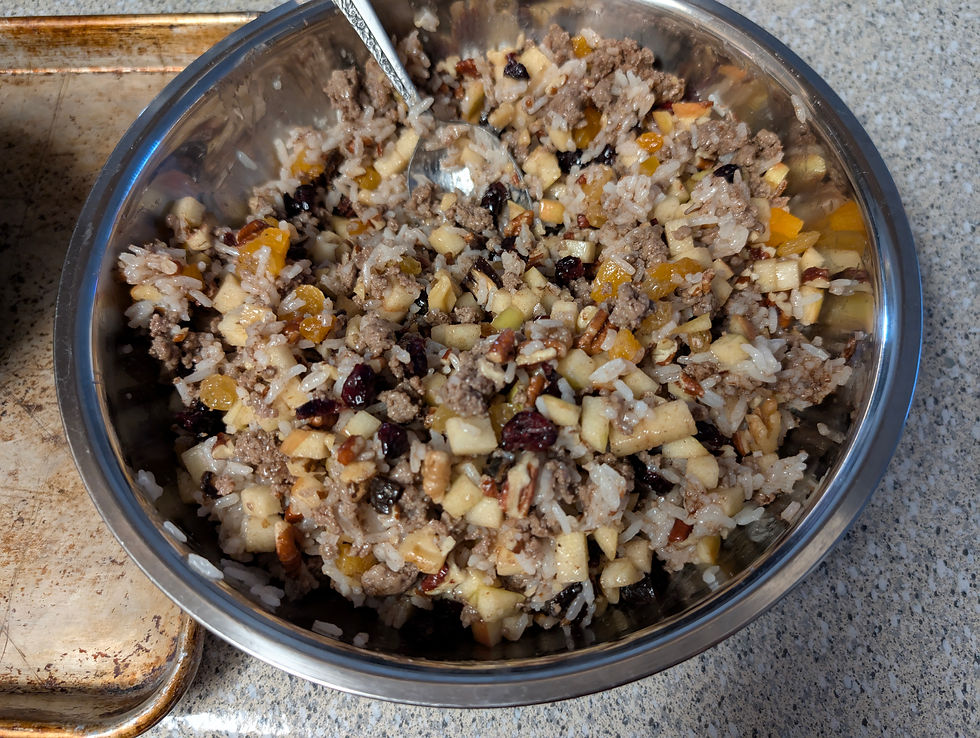
Stuff the Pumpkin
Spoon the rice mixture into the hollow pumpkin. Don’t overfill — leave an inch or so at the top for expansion.
Place the pumpkin lid back on.

Bake
Preheat your oven to 350°F (175°C).
Place the stuffed pumpkin on a parchment-lined baking sheet or in a roasting pan (to catch drips). Wrap in aluminum foil for the first hour so it can keep the heat insulated so it can cook evenly.
Bake for 1.5 to 2 hours, depending on size, until the pumpkin is tender when pierced with a fork.


Serve
Bring the whole pumpkin to the table for maximum effect. Slice into wedges so that each serving includes both pumpkin flesh and rice filling. Garnish with fresh mint, pomegranate seeds, or an extra drizzle of honey.


Tips and Variations
Choose the Right Pumpkin – Medium sugar pumpkins work best; avoid carving pumpkins, which can be watery and bland. (Using the rounded ones with orange skin work best as I learned the hard way how it doesn't cook evenly in a taller pumpkin.)
Parboiling Rice – Don’t skip this step; raw rice won’t cook fully inside the pumpkin.
Sweetness Level – Adjust honey to taste. Traditional versions are only mildly sweet, but you can push it toward dessert by adding more.
Vegan Option – Replace butter with coconut oil or olive oil, and use maple syrup instead of honey.
Mini Ghapamas – For individual servings, try small pumpkins or acorn squash. They bake faster and look charming on a plate.
Why I Love Making Ghapama
There’s something fun about preparing Ghapama. Cutting into the pumpkin, filling it with such abundance, and then waiting patiently while the oven works its magic—it feels like an act of both care and celebration.
As the fall season approaches, making this dish feels like joining a long tradition of people honoring the harvest, gathering around food, and finding warmth in both nourishment and company. For me, it’s also a way of occasionally honoring my husband’s Armenian heritage, connecting with the stories and songs tied to this dish, and making it part of our shared seasonal table when the Fall holidays come.
Final Thoughts
If fall had a single dish that embodied its spirit, Ghapama would be it. It’s festive yet comforting, humble yet celebratory. It takes a seasonal staple—pumpkin—and transforms it into something that feeds not just the body but also the soul.
So as you head into fall this year, I invite you to make Ghapama. Gather your ingredients, carve your pumpkin, stir your rice with fruit and nuts, and let the oven fill your home with warmth and spice. When you slice it open at the table, you’ll see why Armenians sing about it, and why it deserves a place in your own seasonal traditions.
Because in the end, Ghapama isn’t just food. It’s memory, heritage, and the celebration of abundance, all baked into one golden, glowing pumpkin.


Comments